
Crypto Market Weekly
AI Euphoria Cracks as Bitcoin Enters Extreme Fear

Hey everyone, and welcome to the Weekly Market Roundup #30.
BTC fell below $62,000 last week, down roughly 14% and trading at levels not seen since September 2024. The move wasn’t isolated to crypto. AI, the market’s strongest narrative for nearly two years, cracked as well, dragging the Nasdaq down 4.7% and handing the S&P 500 its first weekly loss since March. Even Strategy’s sale of 32 BTC, immaterial from a supply perspective, felt symbolic. For the first time since 2022, one of Bitcoin’s most committed corporate holders became a seller, however small the transaction may have been.
The weakness comes at an uncomfortable moment for markets. Corporate earnings continue to surprise to the upside, fueled largely by AI infrastructure spending and a resilient economy. Yet the same strength is keeping inflation elevated and yields higher for longer, tightening financial conditions globally. Crypto finds itself particularly exposed to that backdrop. Sentiment has collapsed into extreme fear, ETF flows remain persistently negative, and institutional demand continues to deteriorate as capital rotates elsewhere. The result is a market increasingly searching for buyers while macro conditions offer little immediate relief.
That leaves Bitcoin approaching one of the most important levels on the chart. A convincing reclaim of $65,000 would suggest the recent selloff was largely positioning-driven, opening a path toward the $72,000 resistance zone. Failure to reclaim that level keeps downside pressure intact, with $60,500 acting as the next major support. Should that level break, attention shifts quickly toward $58,500 zone. With inflation data, central bank expectations, and risk appetite all set to collide this week, Bitcoin is approaching a point where the next move is likely to shape sentiment for the remainder of the summer.
In this issue, I’ll break down what actually drove the movement, how macro catalysts are compressing into a high-impact window, what on-chain flows are revealing about holder behaviour, and where structural momentum may emerge next.
Let’s get into it.
1. Sector Performance & Key Developments
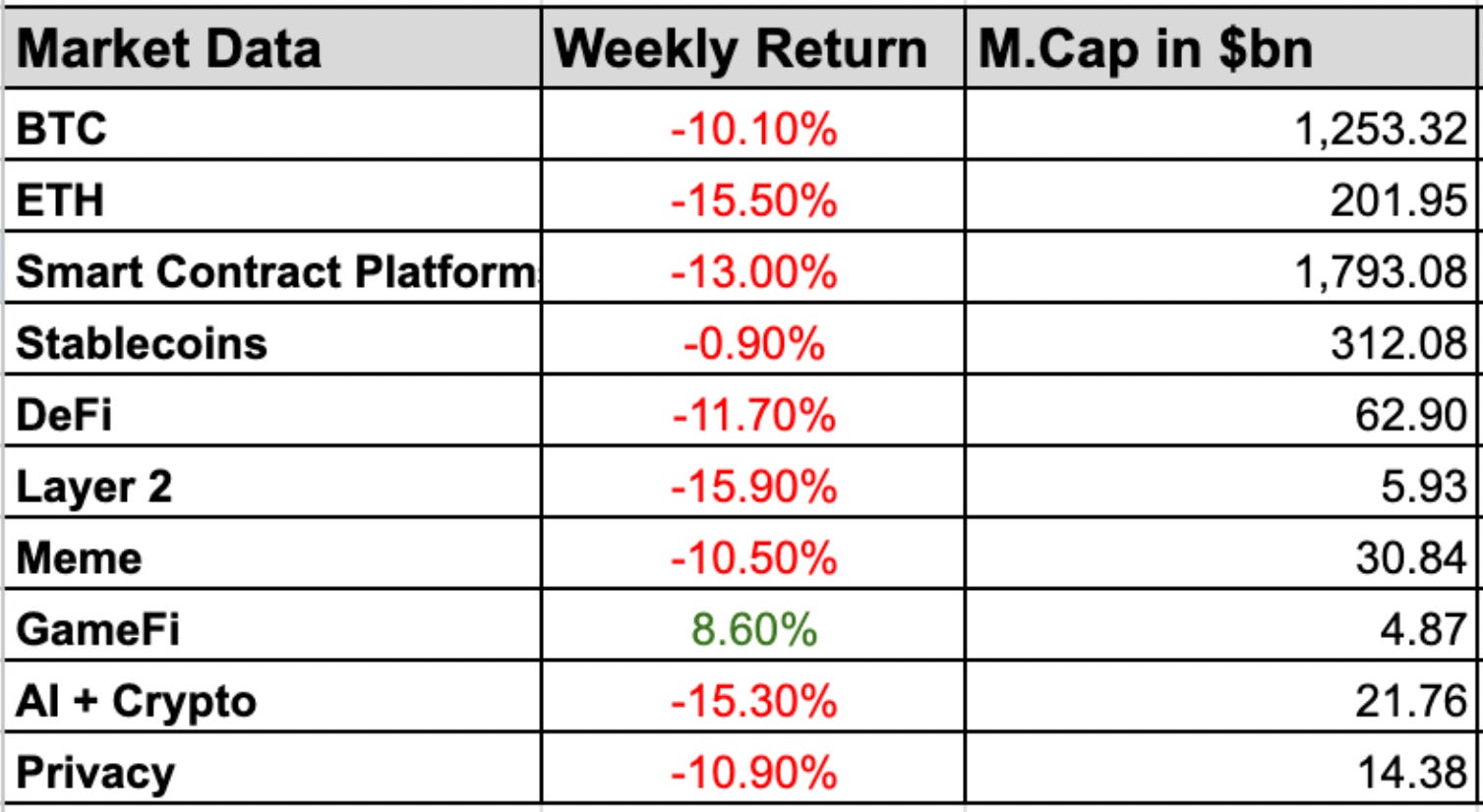
Morpho raises $175 million in a round led by a16z Crypto, Paradigm, and Ribbit Capital.
Strategy announces approval of STRC semi-monthly dividends.
SpaceX plans to sell 555.6 million shares priced at $135, raising $75 billion at a valuation of $1.75 trillion for its IPO.
The NSA has been using Anthropic’s Mythos for offensive hacking, even as the U.S. fights a legal battle with Anthropic.
BitMine files for a preferred stock offering with a yield of 9.5%, according to a filing.
Grayscale Hyperliquid Staking ETF (NASDAQ: HYPG) goes live.
JPMorgan, Citi, and other major banks plan a new tokenized deposit system to compete with crypto.
Strategy buys 1,550 Bitcoin and tops up its USD reserve by $100 million.
Citrini promotes Hyperliquid in a recent post, calling it the antidote to FTX’s failure.
Bybit partners with xStocks and KrakenFX to launch IPO Express; SpaceX IPO subscriptions are now live.
Zcash to audit the supply of the recently patched Orchard Pool using a new method, with more details expected later today.
Humanity token falls more than 90% after an alleged foundation member’s private key was compromised.
FTX co-founder Sam Bankman-Fried formally applies for a Trump pardon.
2. The AI Trade Has a Financing Problem
For the last two years, investors have focused almost entirely on one side of the AI story: demand.
Every quarter brought larger models, bigger data centers, and higher hyperscaler capex. The assumption was simple: AI demand was so strong that infrastructure spending would keep accelerating almost indefinitely.
Last week exposed a more important question. Not whether AI demand exists, but who is funding it.
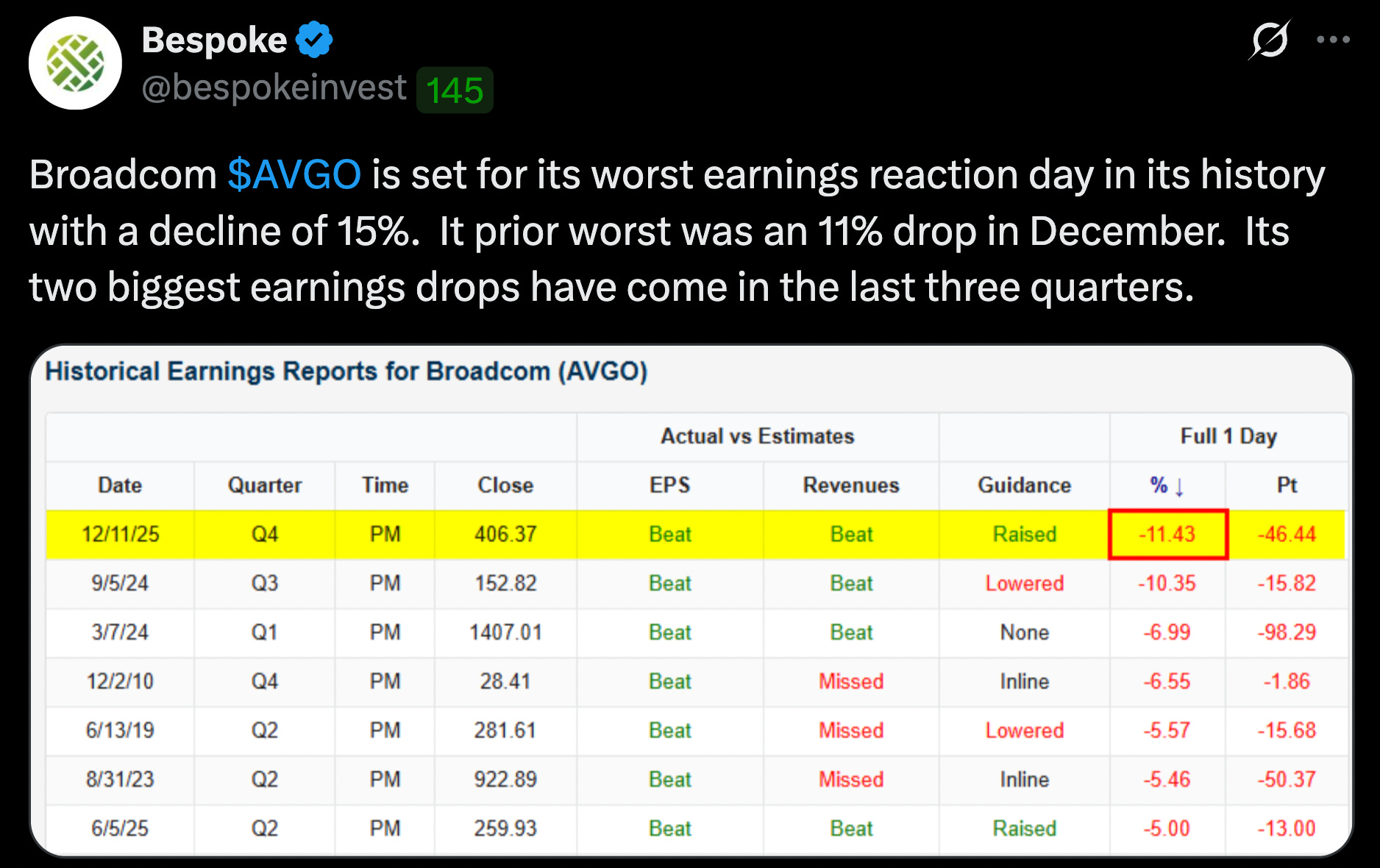
Broadcom’s earnings initially appeared to challenge the AI infrastructure narrative after the company lost roughly $456 billion in market value across two trading sessions despite reporting AI semiconductor revenue growth of 143% year-over-year.
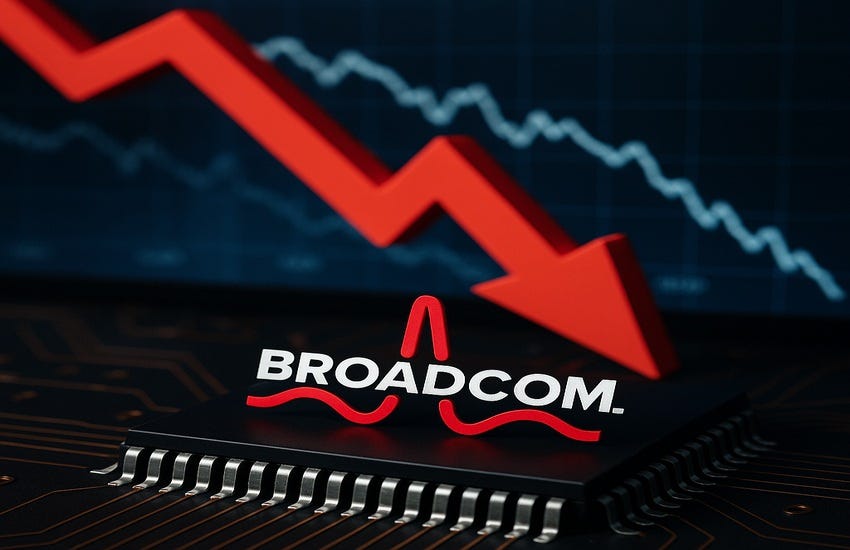
The issue was not weak demand. Broadcom reiterated AI revenue targets, highlighted more than $30 billion in AI semiconductor bookings, and stated visibility now extends through 2028. Investors were instead questioning whether AI spending can continue to justify increasingly stretched valuations and capital requirements
Then came one of the most remarkable financing structures the technology sector has ever produced.
Apollo and Blackstone assembled a $35 billion private credit vehicle to finance computing infrastructure for Anthropic. Rather than Anthropic directly purchasing chips, a special purpose vehicle acquires Google’s TPUs and leases them back to Anthropic. Broadcom, whose technology sits at the center of the AI infrastructure stack, provides guarantees on roughly $30 billion of debt tranches, while Morgan Stanley structured and distributed the financing
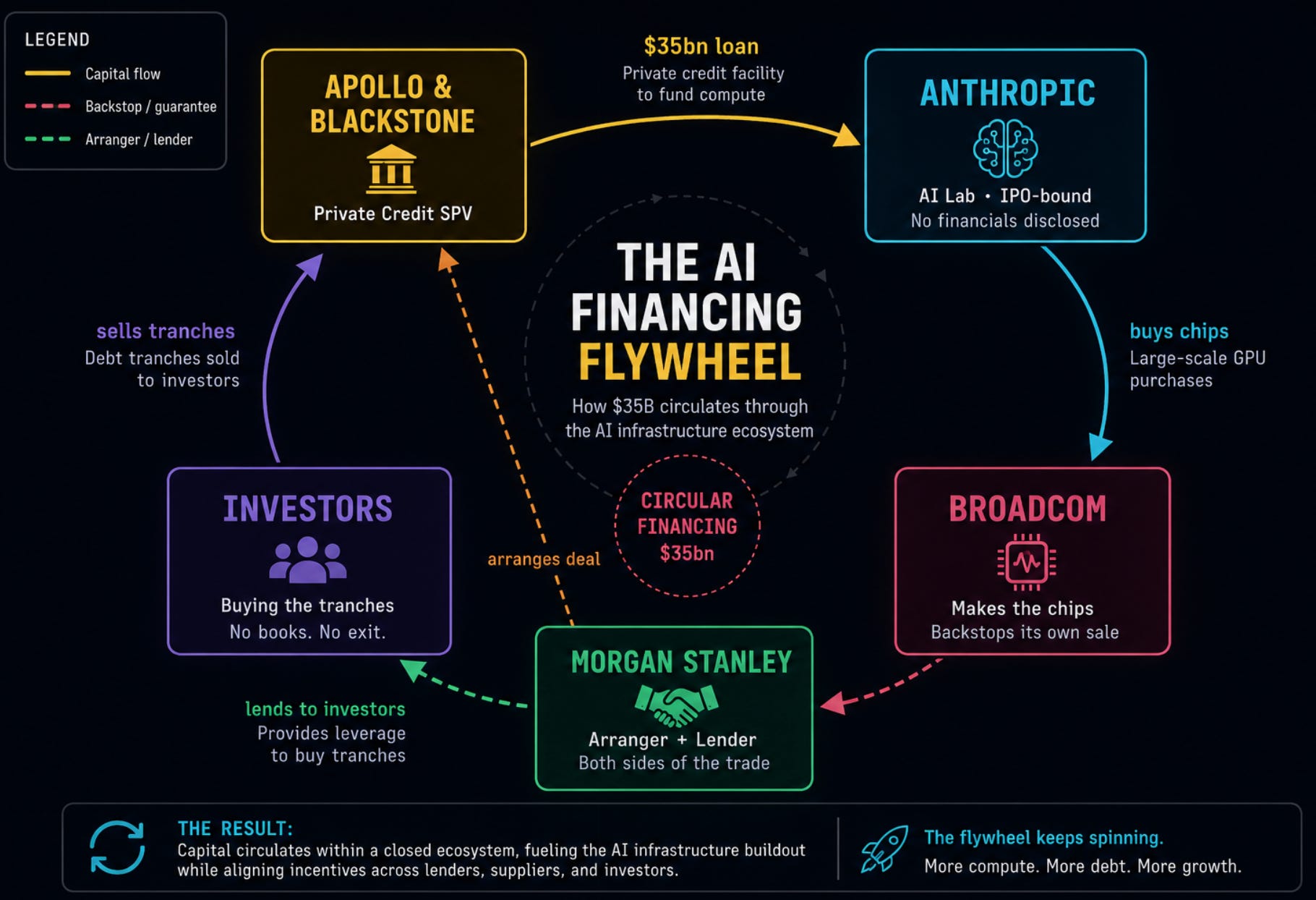
The significance goes beyond Anthropic. This deal reveals how AI infrastructure is evolving from a technology investment cycle into a financing cycle.
Historically, data-center expansion was funded from operating cash flows and balance sheets.
Today, frontier AI development requires capital at a scale where dedicated financing structures are emerging around compute itself.
Chips are increasingly being treated like infrastructure assets, similar to aircraft, power plants, or commercial real estate, capable of supporting long-duration financing against future cash flows.
The structure is also notable because of its circular nature. Investors provide capital to purchase chips. Those chips are manufactured by Broadcom-linked supply chains. Broadcom helps support the financing. The chips are leased to Anthropic, whose demand justifies further infrastructure investment. The entire ecosystem increasingly funds itself through expectations of future AI growth.
That does not mean the cycle is unsustainable. In fact, hyperscaler spending continues to accelerate. Alphabet, Microsoft, Amazon, and Meta are collectively expected to spend hundreds of billions annually on AI infrastructure, while model developers continue to race toward larger and more capable systems. Broadcom itself remains one of the largest beneficiaries of this trend through custom silicon, networking, optical interconnects, and TPU infrastructure that power next-generation AI clusters.
but the conversation is changing now
The key question is no longer whether AI demand exists. It clearly does. The question is whether the economics generated by AI models can ultimately justify the unprecedented amount of capital being deployed to build them.
The Broadcom selloff and Anthropic financing deal are two sides of the same story.
One showed how sensitive markets have become to any sign of slowing upside expectations.
The other showed how aggressively the industry is searching for new sources of capital to keep the infrastructure buildout moving forward.
Together, they suggest that the next phase of the AI boom may be defined less by technological breakthroughs and more by the financial engineering required to sustain them.
3. Macro Backdrop
1. The Economy Refuses to Slow
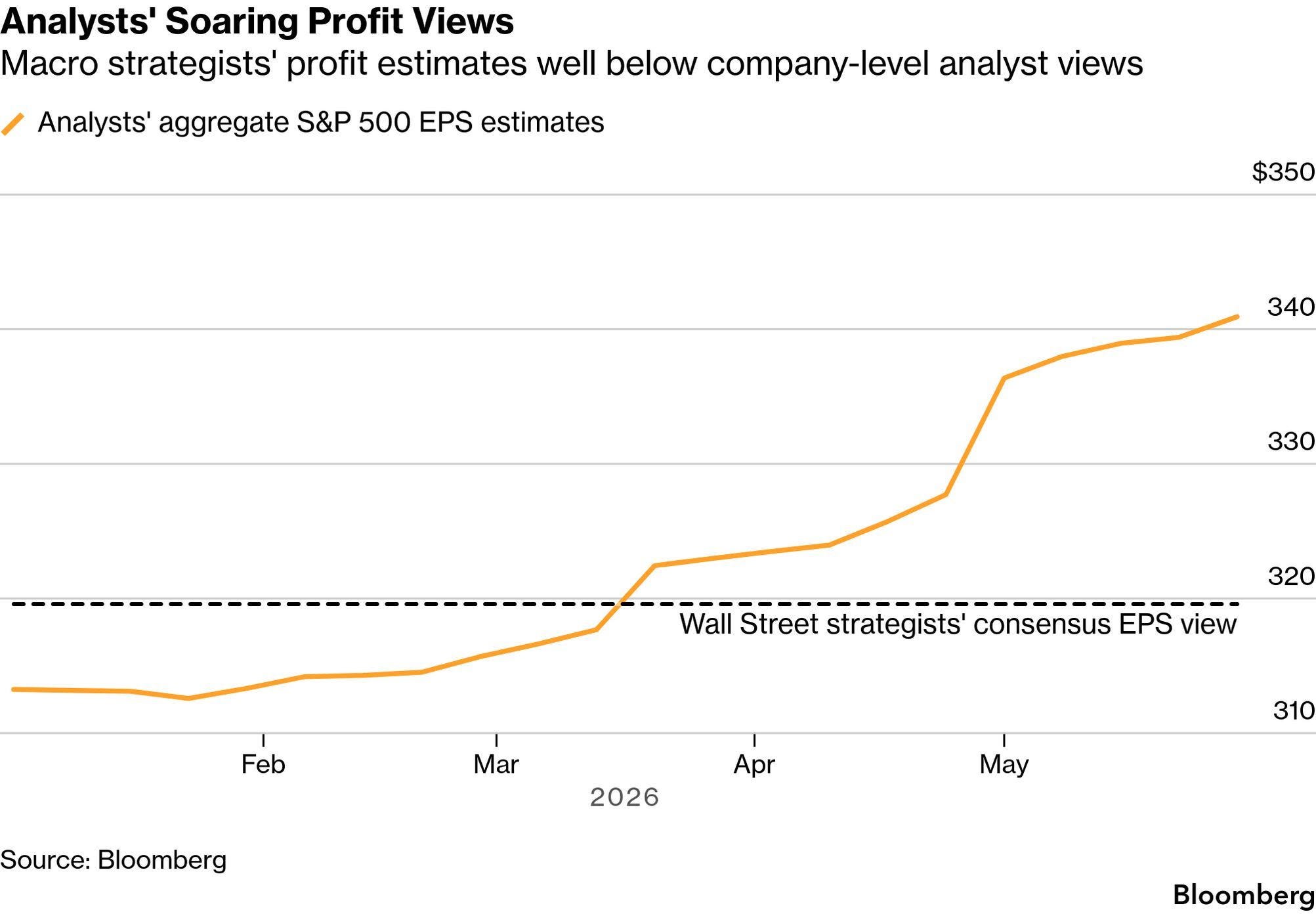
The biggest surprise of 2026 remains the strength of corporate America. S&P 500 earnings estimates have continued moving higher despite persistent inflation, elevated rates, and geopolitical uncertainty. AI infrastructure spending remains the primary engine, contributing roughly half of overall profit growth as hyperscalers continue deploying capital at an unprecedented pace.
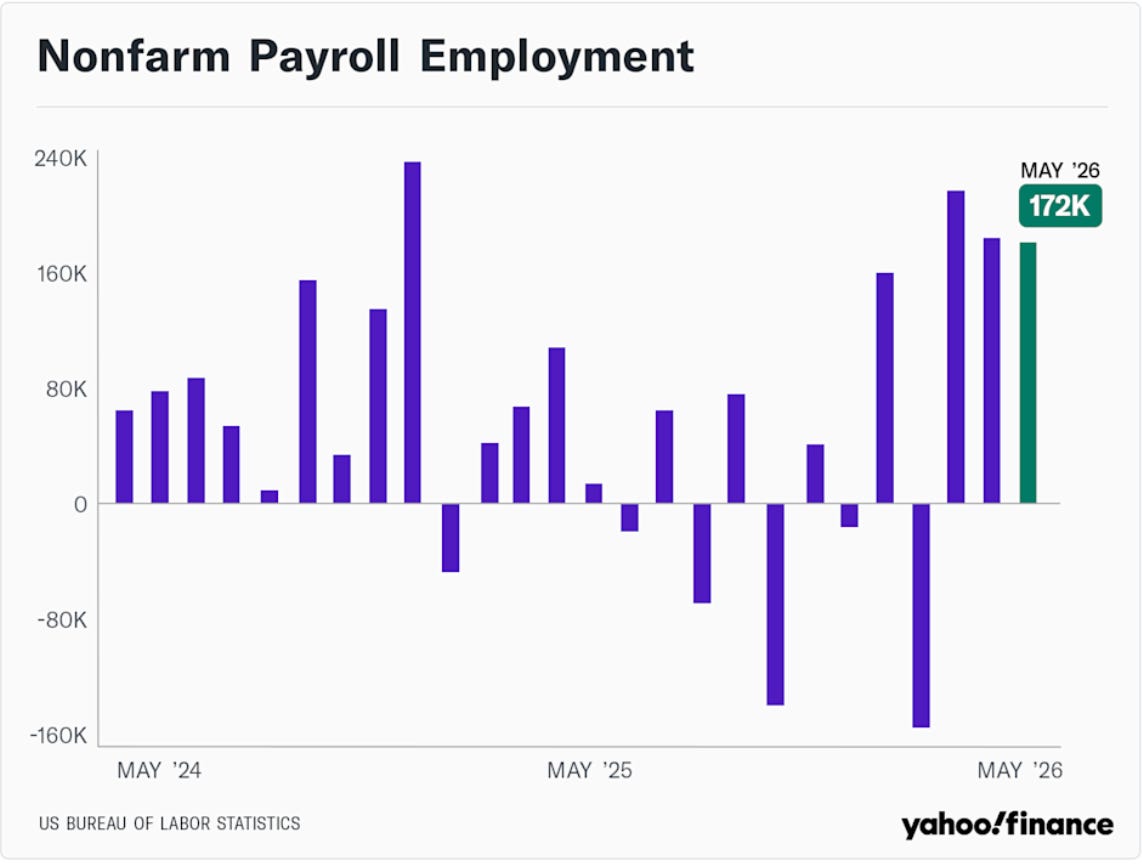
The labor market is telling a similar story. May payrolls increased by 172,000, more than double consensus expectations, while April was revised higher to 179,000. Unemployment remained stable at 4.3%, reinforcing the view that economic activity remains far stronger than policymakers expected at the start of the year
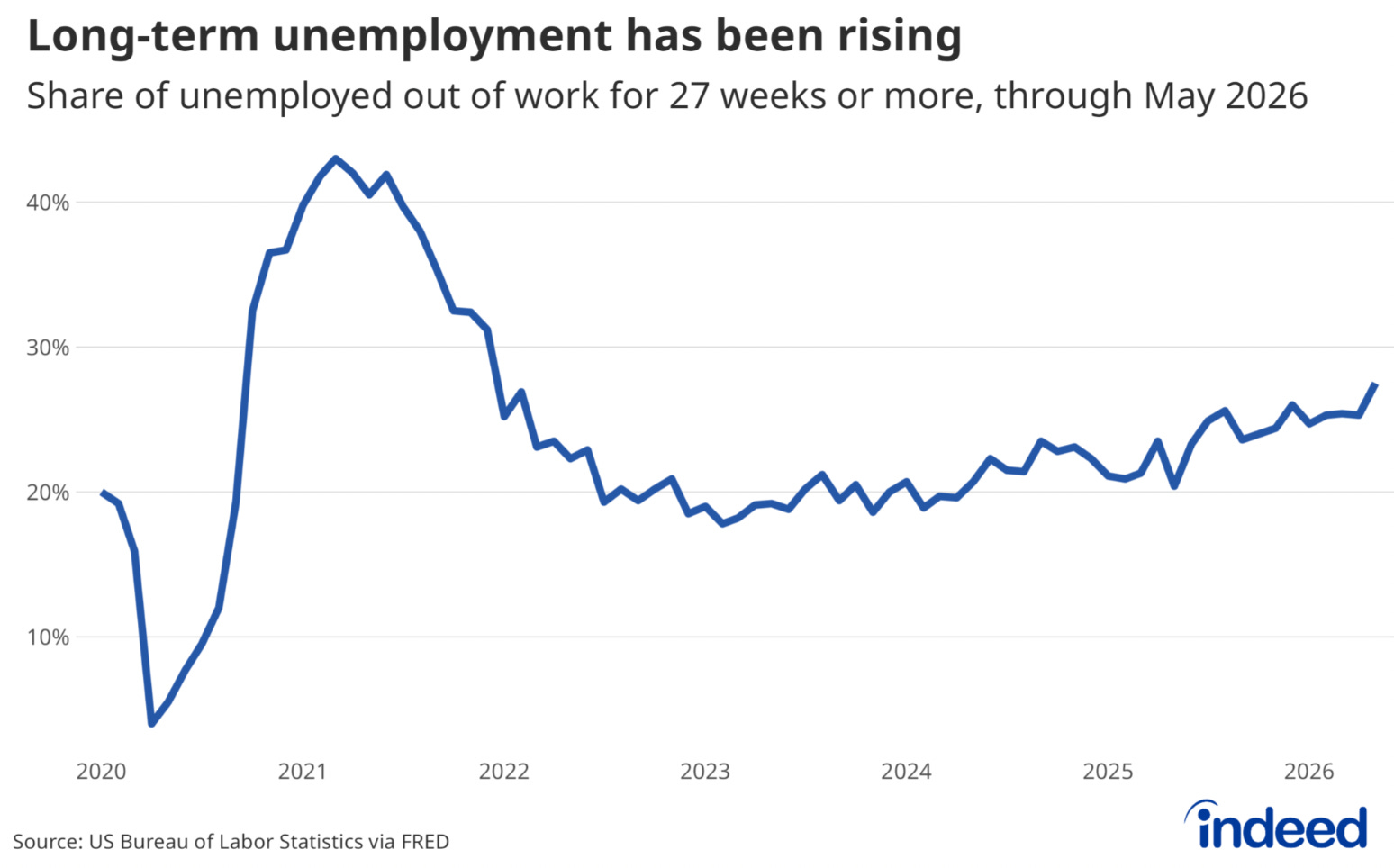
However, beneath the headline strength, cracks are beginning to emerge. The share of workers unemployed for more than 27 weeks has risen to 27.5% of all unemployed Americans, the highest level of this cycle.
Hiring remains concentrated in a handful of sectors, with leisure and hospitality accounting for a significant portion of the recent upside surprise, potentially boosted by World Cup-related demand ahead of the tournament’s U.S. kickoff. The economy remains healthy, but increasingly uneven.
2. The Fed’s Problem Is Inflation, Not Growth
Strong economic data would normally be bullish for risk assets. This cycle, it has become the opposite.
April inflation accelerated to 3.8% year-over-year, the highest reading since 2023, driven largely by higher energy prices following the Iran conflict. Combined with a resilient labor market, the data has effectively eliminated hopes of near-term rate cuts.
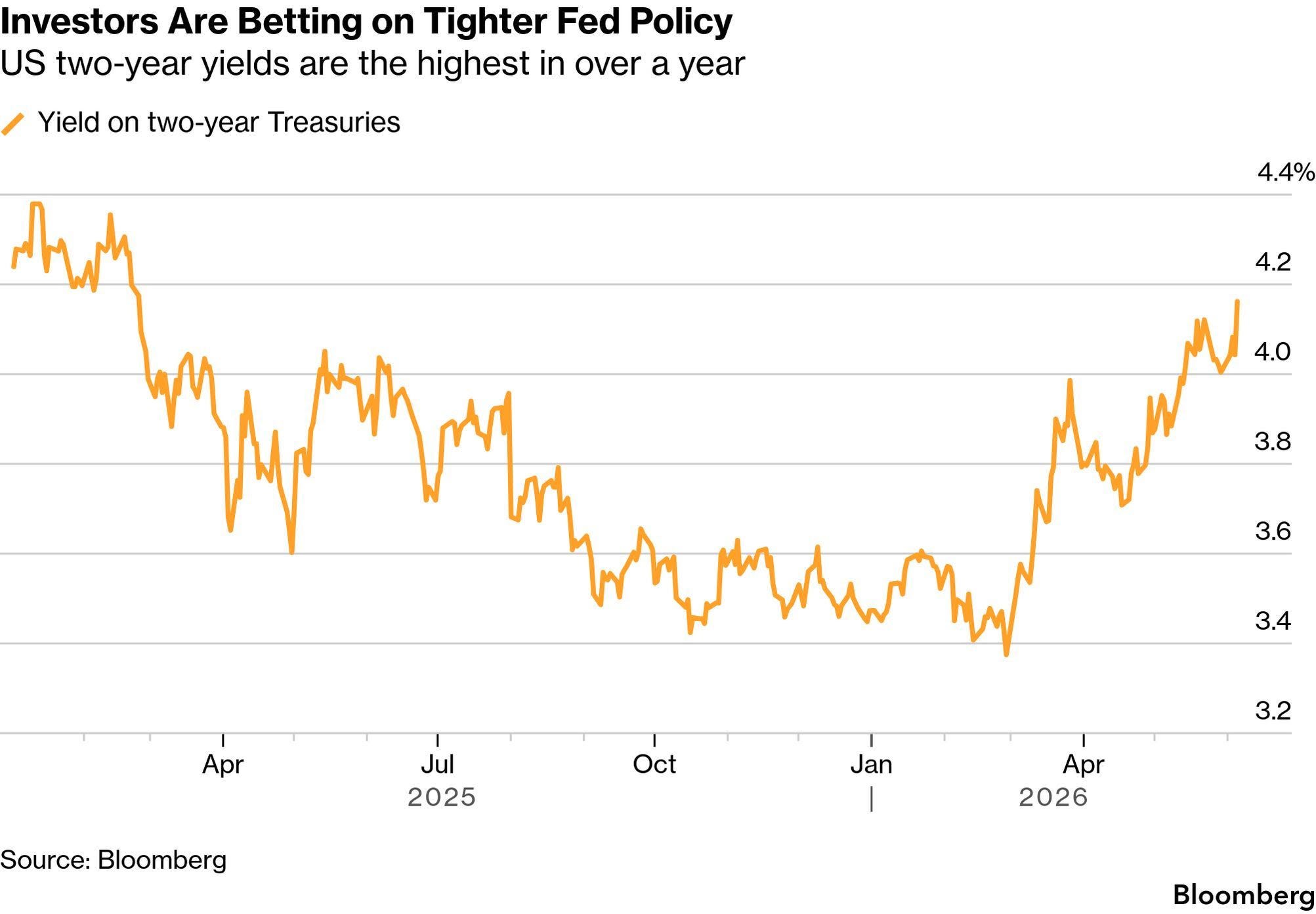
Two-year Treasury yields have climbed to their highest levels in over a year as markets increasingly price a Federal Reserve that may need to stay restrictive for longer.
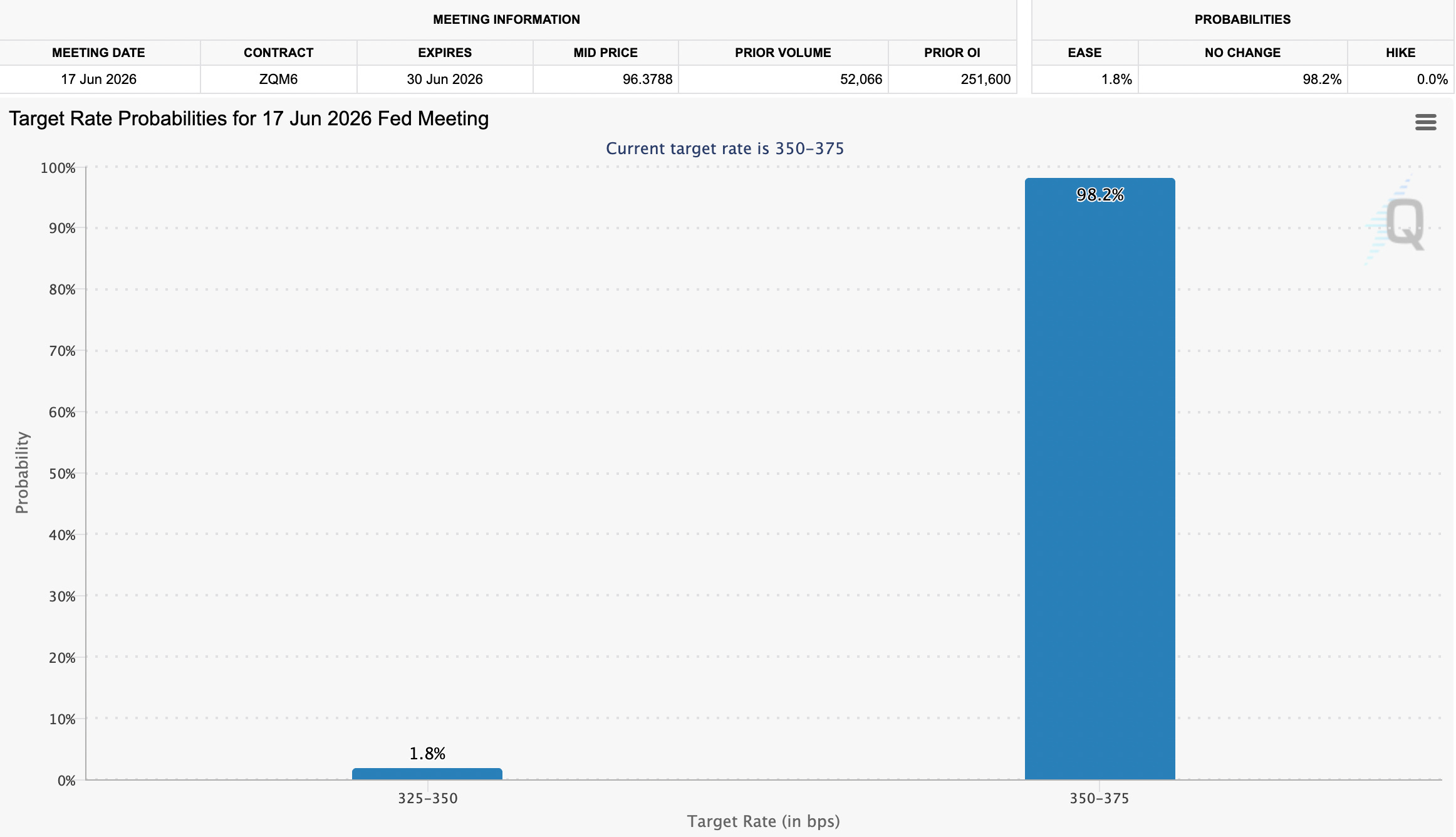
Investors are now focused on the June 16-17 FOMC meeting, where rates are almost certain to remain unchanged. The real risk is not the decision itself but a potential shift in tone. Markets have begun assigning meaningful probability to at least one additional rate hike before year-end, making the updated dot plot and Chair Warsh’s language arguably more important than the policy announcement.
The next major catalyst arrives on June 10 with the May CPI report. In a market dominated by inflation fears, it may prove to be the most important macro release of the month.
3. Geopolitics Is Tightening Global Financial Conditions
The effects of higher energy prices are no longer confined to the United States.
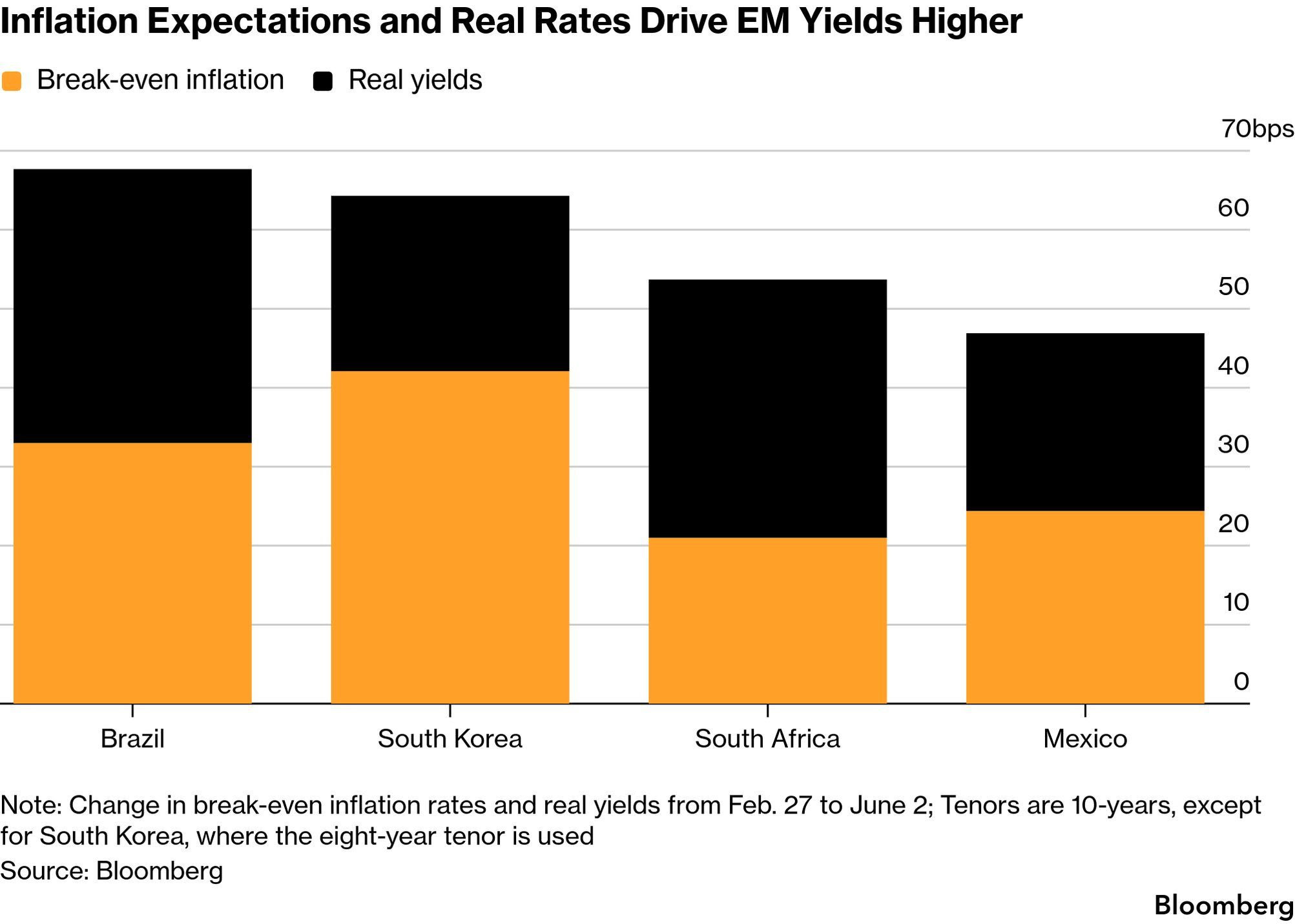
Emerging market bond yields across Brazil, Mexico, South Africa, and South Korea have risen sharply since late February as central banks abandon easing plans and prepare for renewed inflation pressures. Commodity-importing economies have been particularly vulnerable, facing tighter financial conditions at precisely the moment they were expected to receive monetary relief.
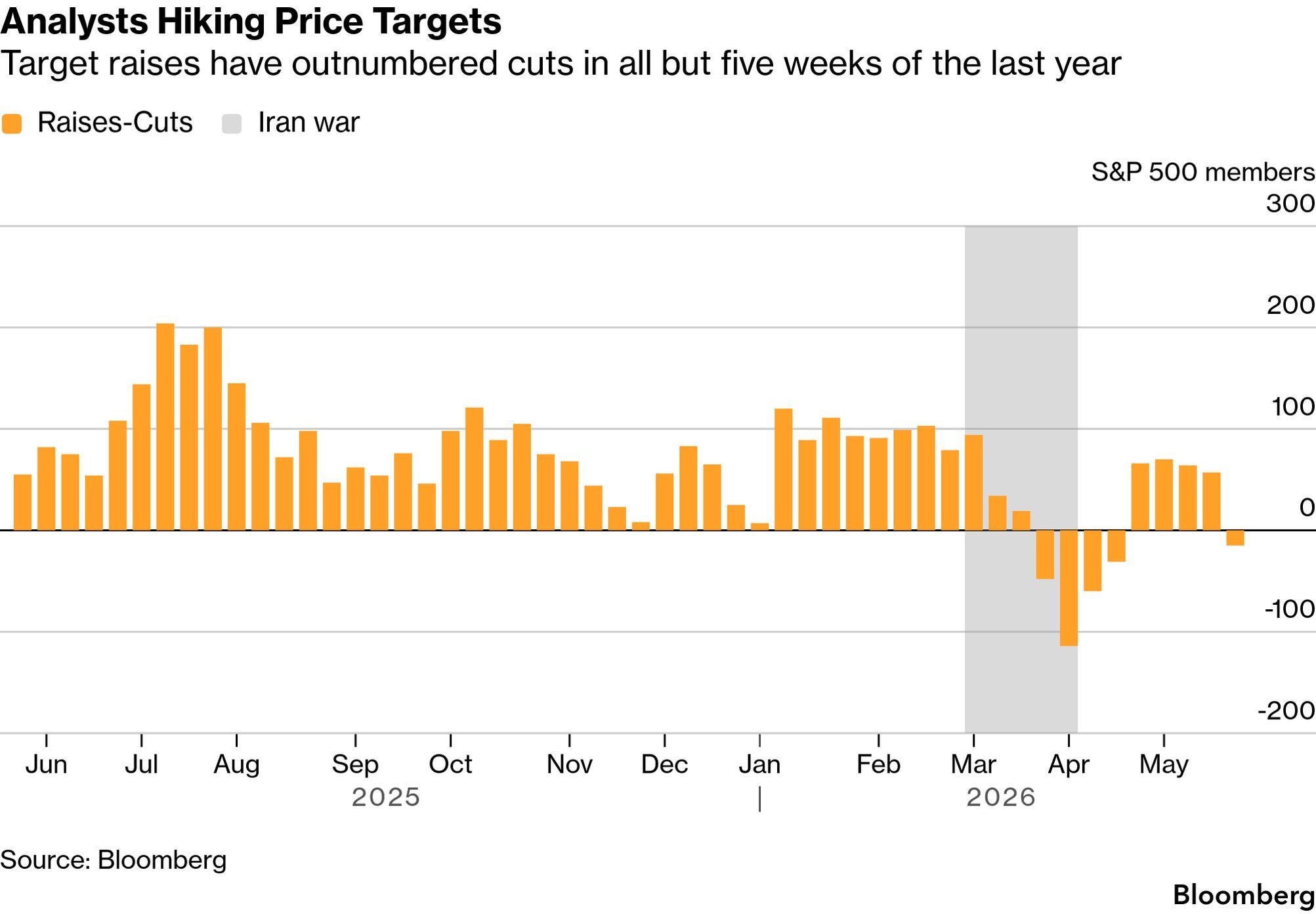
Equity markets have also struggled to regain confidence following the Iran conflict. The S&P 500 declined nearly 9% after hostilities began on Feb 28, triggering weeks of analyst target cuts and positioning reductions. While sentiment has improved following the ceasefire, upgrades remain selective rather than broad-based. Investors appear willing to buy earnings growth, but unwilling to aggressively expand valuation multiples while geopolitical risks remain elevated.
4. Risk Assets Are Searching for a New Bid
The combination of higher yields, geopolitical uncertainty, and stretched positioning has created a difficult backdrop for speculative assets.
The recent correction in AI equities exposed how dependent market leadership had become on a narrow group of winners. Broadcom’s post-earnings collapse triggered a broader reassessment of AI-related multiples, while rising yields simultaneously pressured growth assets across the board.
Crypto has faced a similar dynamic. ETF flows had already been weakening before the recent drawdown, while OTC activity suggested institutional demand was fading beneath the surface. The equity rally masked that deterioration for weeks.
Once AI stocks cracked and yields moved higher following the payroll report, Bitcoin and other risk assets found themselves without sufficient incremental buyers.
There is a constructive interpretation: Long-term allocators appear to be accumulating selectively after one of the weakest periods for ETF demand this year, viewing current levels as increasingly attractive on a multi-year horizon. But the immediate challenge remains unchanged: strong earnings continue to support the economy, while inflation, yields, and geopolitics continue to restrict liquidity.
That leaves markets trapped between solid fundamentals and increasingly tight financial conditions, with inflation data and central bank communication likely determining which force wins during the second half of June.
4. ETF Insights
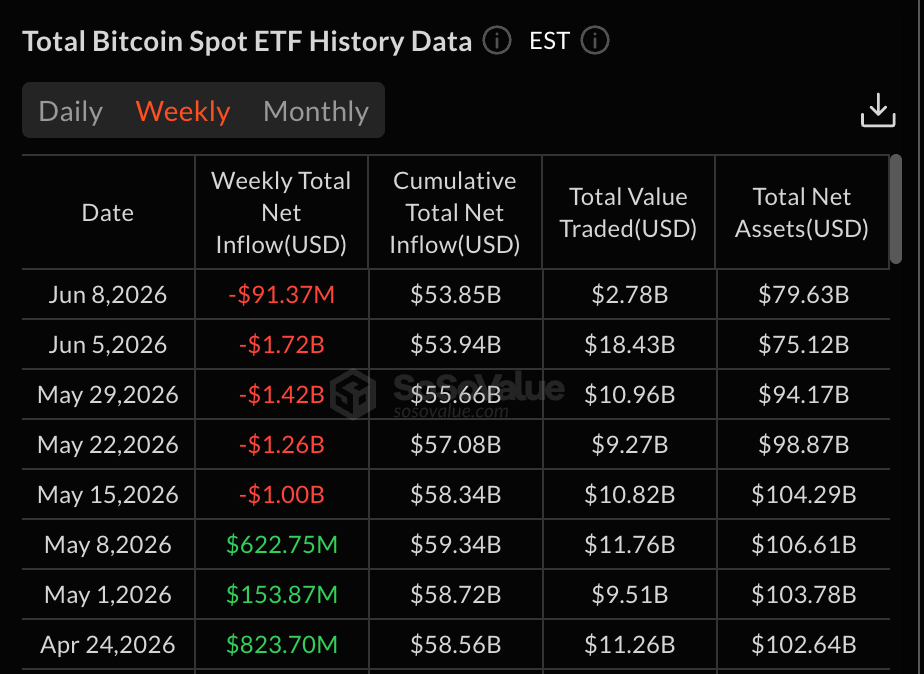
Bitcoin ETFs have yet to record a single day of net inflows in June, extending the outflow streak that began in mid-May. Friday alone saw approximately $330 million leave the products, pushing total Bitcoin ETF assets under management down to roughly $102 billion and highlighting a continued lack of institutional conviction
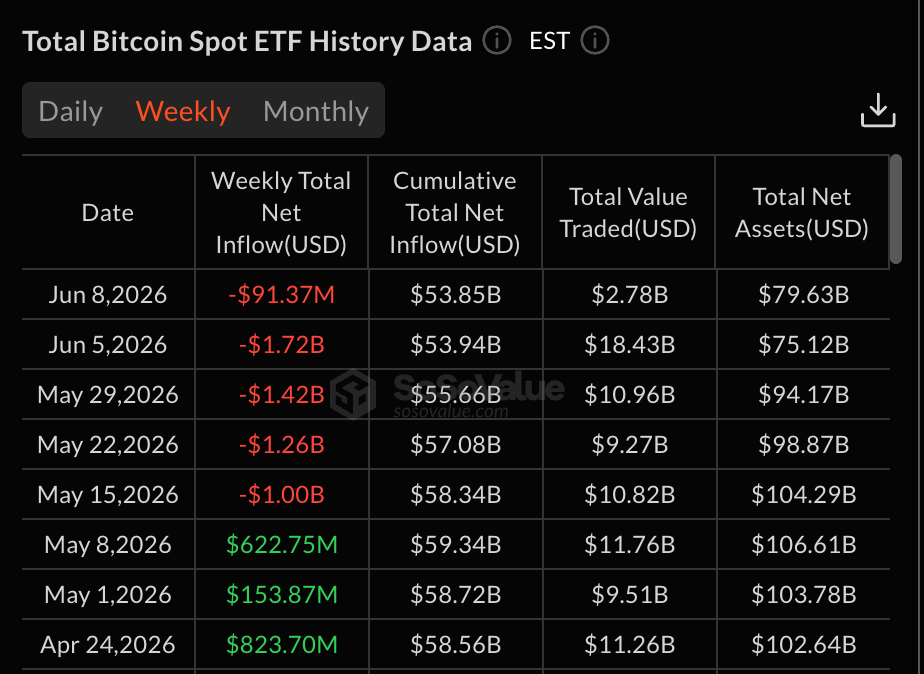
ETF flows suggest capital remains firmly on the sidelines. A sustainable recovery will likely require not just improving sentiment, but a clear stabilization in institutional demand and ETF inflows before confidence can meaningfully return to the market.
5. The Week Ahead
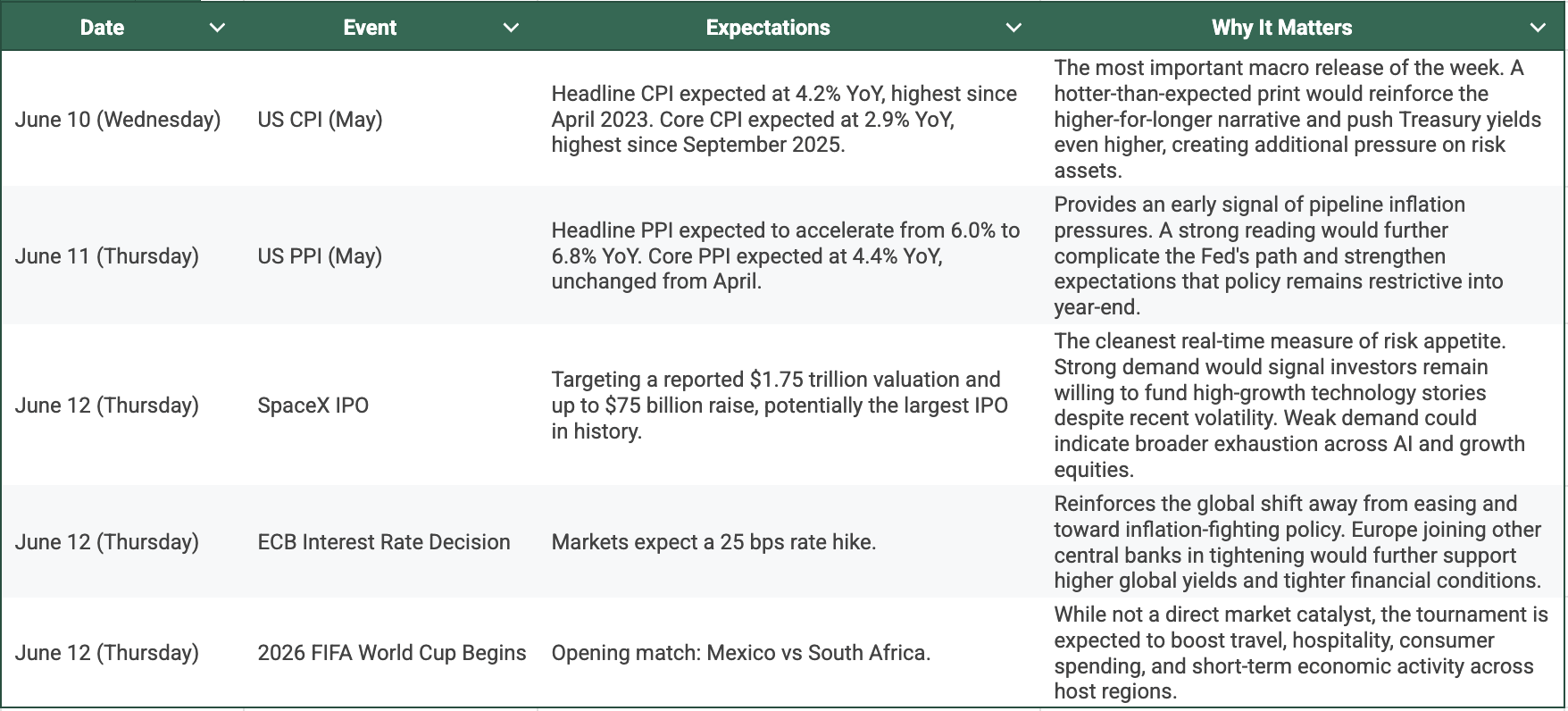
This week’s macro narrative revolves around a single question: Is inflation reaccelerating?
If CPI and PPI come in hotter than expected, markets may begin pricing a more hawkish Fed path, putting further pressure on equities, crypto, and duration-sensitive assets. If inflation surprises to the downside, risk assets could finally find relief after several weeks dominated by higher yields and geopolitical uncertainty.
Alongside inflation data, the SpaceX IPO will serve as an important test of investor risk appetite, potentially offering the clearest signal yet on whether the recent selloff was merely a reset or the start of a broader repricing across growth assets.
6. Conclusion
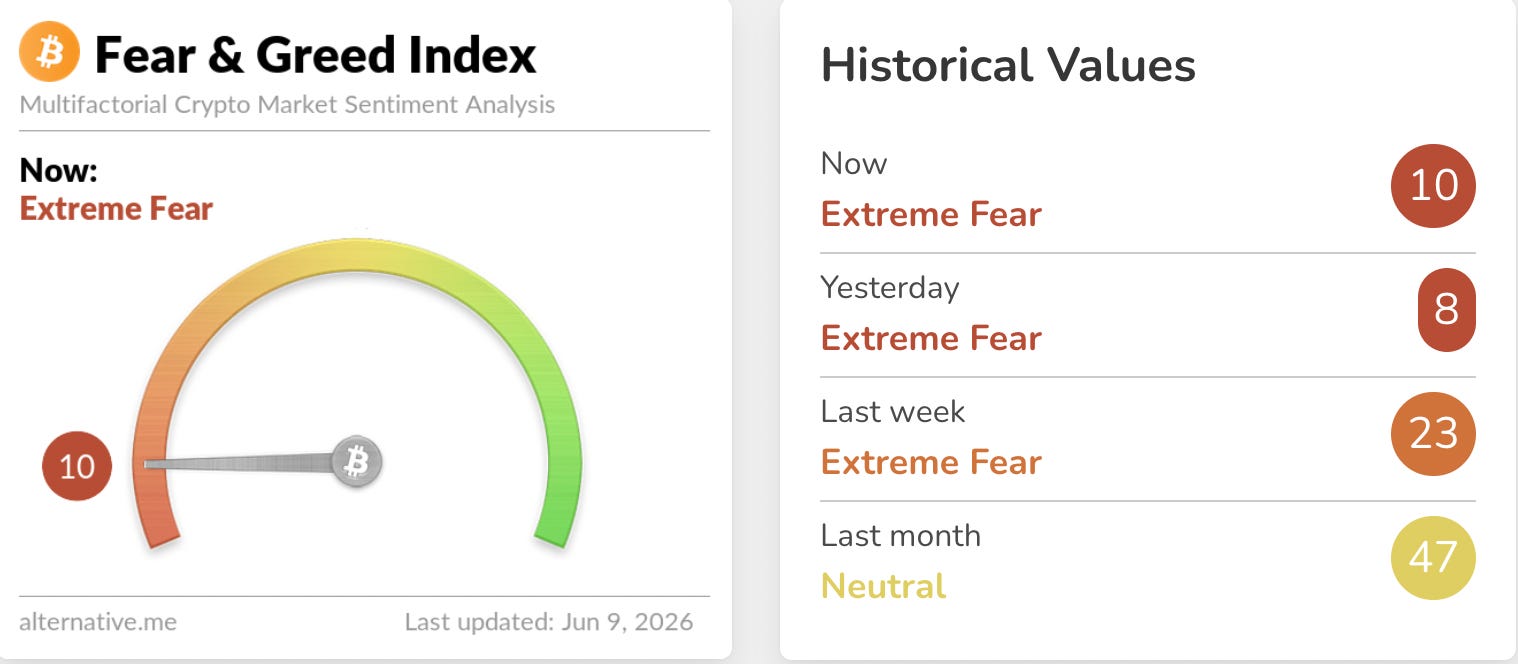
Market sentiment has deteriorated sharply over the past month, with the Fear & Greed Index plunging from 50s in May first week to just 8 this week ( currently at 10), entering extreme fear territory. The speed of the decline underscores how rapidly confidence has evaporated as Bitcoin's correction deepened, with investors shifting from cautious optimism to outright risk aversion. Historically, such readings can coincide with periods of market stabilization, but for now they reflect a market where participants remain highly sensitive to downside volatility and reluctant to deploy fresh capital.
In a market driven by liquidity swings and institutional flow, our Crush Circle platform by CryptoCrush gives investors direct access to expert research, real-time guidance, and the frameworks needed to stay ahead of the next big move.
Visit here for more information 👇